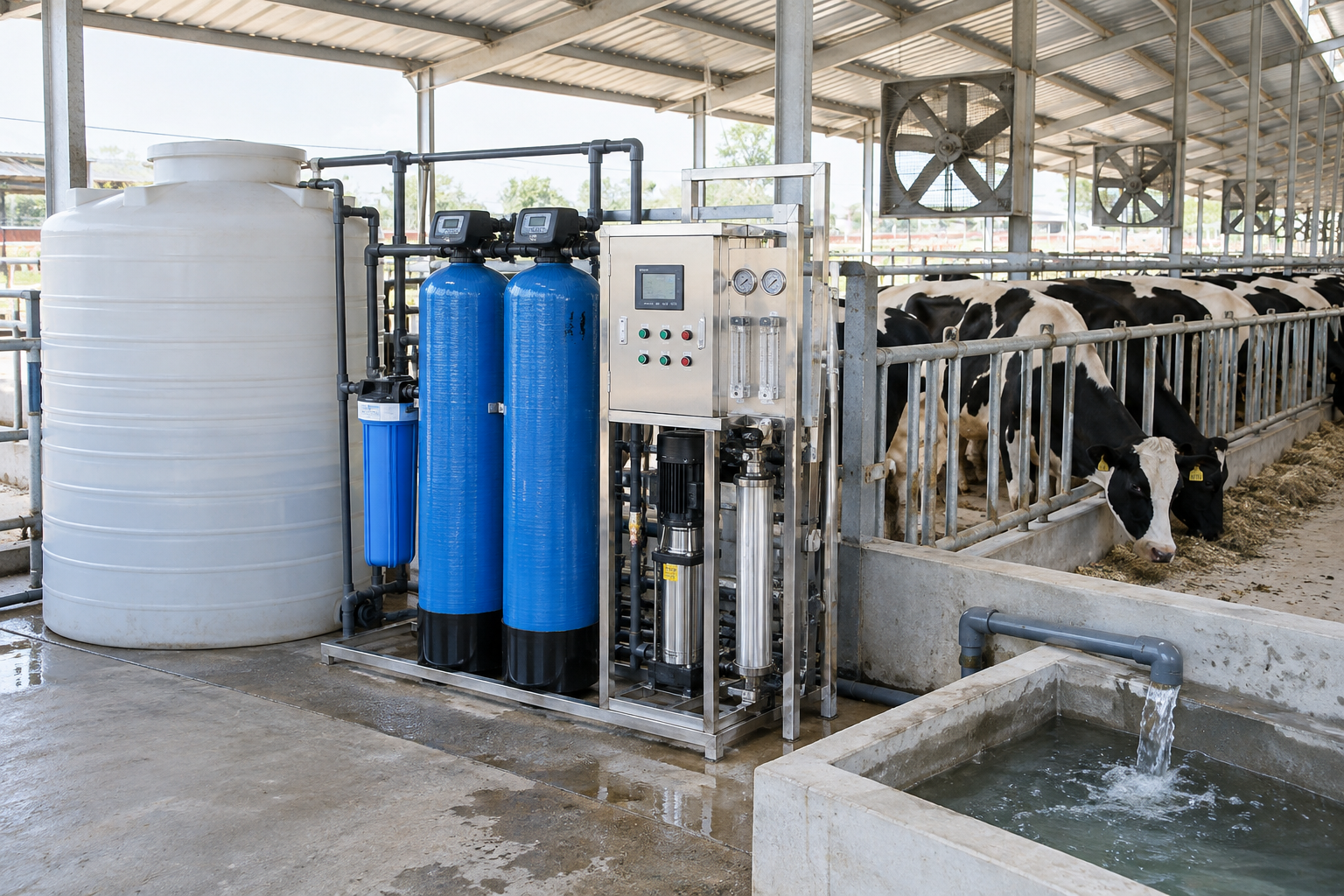

Before requesting an RO system quotation, prepare your water source information, required treated water output, electrical supply details, installation dimensions, drainage arrangements, and storage requirements. Photos and a simple site sketch can help a supplier identify what must be included or confirmed.
You do not need a complete engineering drawing to start. The aim is to give the supplier enough information to recommend a workable configuration and clearly identify any remaining assumptions.
This checklist is intended for small businesses planning commercial RO systems from 250 to 5,000 L/hour.
1. Describe Your Water Source and Intended Use
Tell the supplier where the water comes from and what you need the treated water to do.
Provide:
- Installation country and location.
- Water source: municipal supply, borehole, surface water, or another source.
- A recent water analysis, including its sampling date and sampling point.
- Any treatment already installed before the proposed RO system.
- Intended use, such as packaged drinking water, food production, or process water.
- Any required treated water specification.
State whether the sample was collected directly from the source or after existing treatment. A report from one point may not represent the water entering the proposed equipment.
If you do not have a report, start with the information available and ask which tests are needed. Read What Water Test Do I Need Before Buying an RO System? for guidance.
2. Explain Daily Demand and Your Operating Schedule
Provide daily water demand as well as any hourly capacity you have in mind. Explain how many hours the system can realistically produce water.
- Normal daily treated water requirement.
- Busy-day requirement.
- Available production hours.
- Times when water consumption is highest.
- Expected interruptions to raw water or electricity.
For example, “5,000 litres per day, produced within five hours, with most filling taking place in the afternoon” is more useful than “we need a small RO machine.”
If a filling machine or production line is already selected, send its required water flow, inlet pressure, and working schedule. Nameplate capacity alone may not describe actual daily consumption.
3. Show How Raw Water Reaches the System
The supplier needs to understand the water supply arrangement, not just the source water quality.
Explain:
- Whether water comes directly from a supply pipe, well pump, or storage tank.
- Available flow and pressure, if measured.
- Whether the supply is continuous or intermittent.
- Existing tank capacity and approximate position.
- Existing pump details, if a pump will be reused.
- Approximate pipe distance and height difference to the installation area.
If flow or pressure is unknown, mark it as unconfirmed. Ask the supplier or local installer how it should be checked.
Do not assume that an existing pump will suit the new system. Its operating performance needs to match the proposed feed arrangement.
4. Confirm the Electrical Supply at the Installation Point
Provide voltage, phase, and frequency together. “We use 220 V” is incomplete information for equipment selection.
- Supply voltage.
- Single-phase or three-phase supply.
- Frequency: 50 Hz or 60 Hz.
- Available electrical capacity, confirmed by a local electrician.
- Known voltage fluctuations or outages.
- Generator or solar inverter details, if relevant.
Confirm the supply at the actual installation point rather than relying only on the country’s nominal electricity specification.
Ask a qualified local electrician to verify the connection requirements, protection, and earthing arrangements. Send existing labels or documents; there is no need to open electrical enclosures to take enquiry photos.
If backup power is planned, ask the equipment supplier and backup-power provider to check compatibility, including motor starting requirements.
5. Measure Installation Space and Delivery Access
A machine fitting into a room does not necessarily mean it can be installed and maintained there.
Send measurements for:
- Available room length, width, and clear height.
- Doors, corridors, stairs, and other delivery restrictions.
- Proposed positions of pretreatment, RO equipment, and tanks.
- Nearby pipe connections, drains, and electrical supply.
- Any columns, low beams, or fixed equipment.
Ask the supplier to show maintenance clearances on the proposed layout. Cartridge replacement, membrane removal, valve servicing, and tank access may need space beyond the equipment footprint.
Also describe the environment: indoors or outdoors, direct sunlight, dust, rain exposure, ambient temperature, and any coastal exposure. These conditions can influence enclosure, material, and shelter requirements.
6. Identify Drainage and Treated Water Storage Arrangements
RO reject water and pretreatment discharge must have a suitable destination. A nearby floor drain does not establish that its capacity or discharge route is appropriate.
Show the proposed drainage location and route. Ask the supplier for expected normal and peak discharge flows, including backwashing or regeneration where relevant. Have the local installer confirm the arrangement against applicable site requirements.
For treated water storage and delivery, explain:
- Whether tanks already exist or will be purchased locally.
- Tank capacity, material, and intended location.
- Distance and elevation to the points of use.
- Required delivery flow and pressure, if known.
- Any existing disinfection or distribution equipment.
Storage, disinfection, and distribution should match the intended use. For drinking water, discuss hygiene and cleaning arrangements throughout the path from treatment to consumption or packaging.
7. Send Useful Photos and Identify Local Support
A small set of clear photos can make an enquiry easier to assess.
- A wide view of the installation area.
- The raw water tank, pump, and supply connection.
- Existing equipment nameplates.
- The proposed drain and discharge route.
- The entrance and delivery path.
- A simple sketch with dimensions and connection positions.
Tell the supplier who will handle local plumbing, electrical work, unloading, and daily operation. This helps define the installation materials, documents, training, and support to include.
For an existing site, also identify which equipment you intend to keep. Reuse should be confirmed during selection rather than assumed from a photograph.
8. What If Some Site Information Is Still Missing?
Start with the information you have. Mark missing items as “to be confirmed” rather than guessing.
A preliminary quotation can help establish a budget, but it should identify its assumptions. Before approving production, agree which details must be verified and whether they could change the configuration or price.
Use these three final checks:
- Can the site supply the water and electricity required by the proposed system?
- Can the equipment be delivered, installed, drained, and maintained in the available space?
- Is responsibility clear for every item supplied or completed locally?
AquaOxy helps small businesses select RO systems from 250 to 5,000 L/hour based on source water, intended use, and operating conditions.
Contact AquaOxy with your water information, daily demand, electrical details, and site photos. Tell us what is confirmed and what still needs checking so we can discuss a suitable configuration and supply scope.