
To verify an RO system before shipment, agree the test conditions and acceptance criteria in advance. Then request identifiable equipment records, product-flow and water-quality results, operating readings, and checks of the included controls.
A video showing water leaving a pipe is useful supporting evidence, but it cannot establish the full treatment performance. You need to know which machine was tested, what water it received, and how it was operating when the readings were taken.
Agree What Passing the Test Means
Before assembly is complete, put the test scope in writing. Identify the required product flow, relevant water-quality target, operating conditions, test duration, and permitted acceptance tolerances.
Define whether the test covers only the RO unit or also pretreatment, dosing equipment, tank controls, and other supplied components.
Separate a membrane manufacturer’s individual-element test from acceptance of the assembled system. The element’s published test conditions do not automatically represent your complete plant or source water.
Also agree how incomplete items or failed checks will be recorded, corrected, and retested. A documented issue with a clear corrective action is more useful than an unexplained claim that everything is satisfactory.
Identify the Machine and the Test Water
The test report should identify the order, equipment model or serial number, date, and configuration. Check that important component models match the agreed equipment schedule.
Request the test-water source, temperature, conductivity or TDS with its measurement basis, and other chemistry relevant to the agreed test.
If your equipment is intended for saline borehole water but the factory uses lower-salinity water, the test still provides useful information about assembly and operation. It does not directly demonstrate identical output on your source.
Ask how the design projection and factory results relate to each other, and which performance checks remain for site commissioning.
Check Flow and Water Quality Together
Product flow and product-water quality should be recorded at the same operating condition. A high-flow demonstration and a separate low-conductivity demonstration do not prove that both requirements are met together.
Request time-stamped readings of the relevant parameters:
- Product-water and final concentrate flows.
- Feed pressure and other specified pressure readings.
- Feedwater temperature and conductivity.
- Product-water conductivity and any other agreed quality results.
- Operating settings and any changes made during testing.
Ask how instruments were checked or calibrated. Flow can also be cross-checked using a calibrated collection vessel and elapsed time where the arrangement permits.
For example, collecting 20 liters in 72 seconds corresponds to 1,000 L/hour. This is a calculation example only. The collection point, measured volume, timing, and stable operating condition must all be established for a real test.
Look for a Running Record, Not One Favorable Reading
Agree a recording interval and a test duration appropriate to the equipment and acceptance purpose. Distinguish initial flushing and stabilization from the period used to assess performance.
A running record helps show whether output, quality, and pressures remain within the agreed range. It also reveals whether the operator repeatedly changed settings to obtain selected readings.
There is no single short test duration that proves long-term reliability for every RO system. A factory run cannot establish months of scaling resistance, consumable life, or behavior under seasonal water changes.
Treat those questions separately through design review, appropriate operating limits, and ongoing monitoring after installation.
Verify Controls and Inspect the Supplied Configuration
Have qualified personnel demonstrate the included control functions using an approved test procedure. Depending on the agreed design, these may include low-feed protection, tank-level control, alarms, and the startup or shutdown sequence.
Do not ask operators to create unsafe conditions or damage equipment to demonstrate a protective function. The method and expected response should be agreed beforehand.
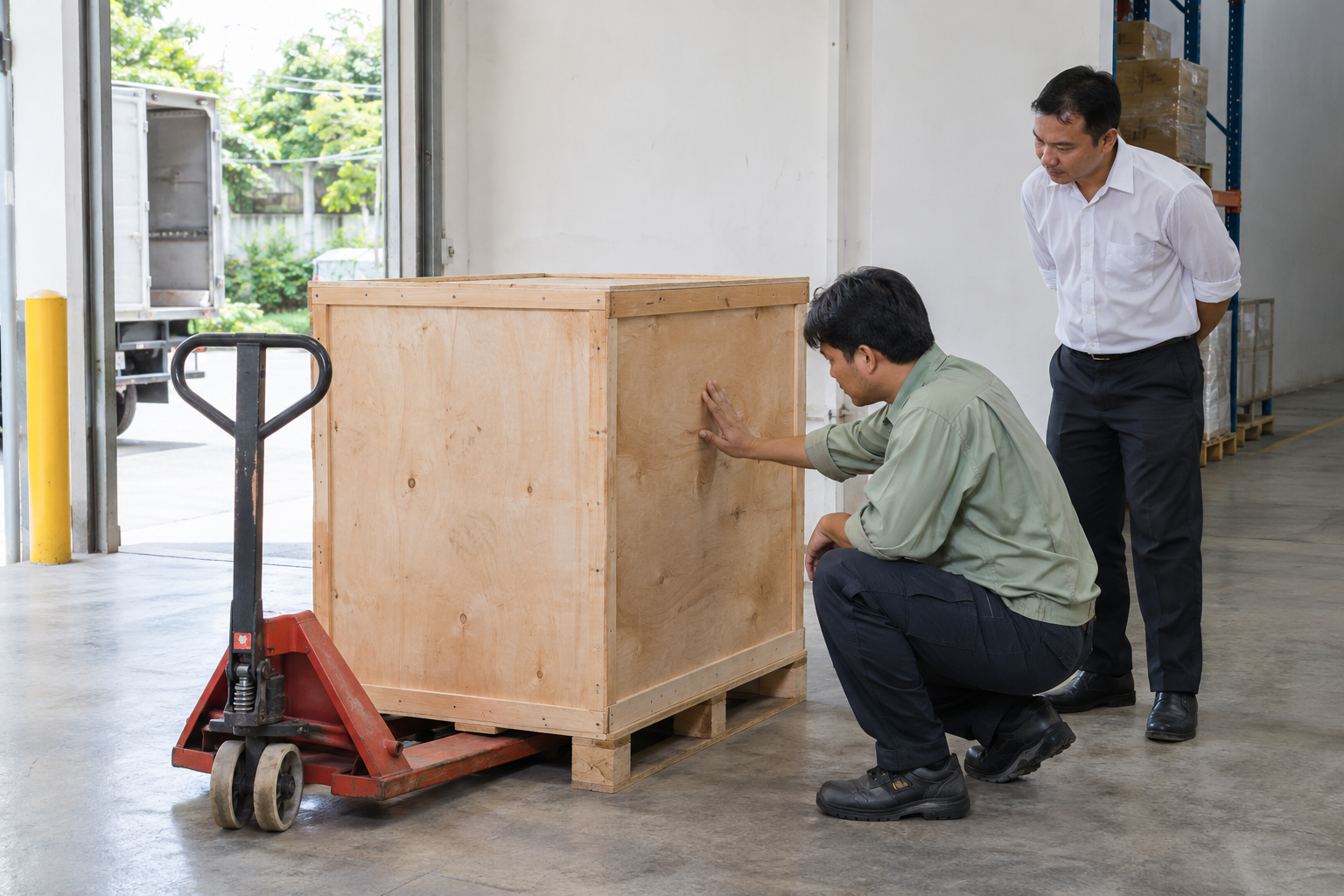
Inspect for leaks, secure mounting, accessible service points, and clear identification. Reconcile supplied accessories and spare parts with the packing list.
For remote witnessing, ask for a live walkthrough or continuous video linking the equipment identity, operating condition, and instrument readings. Independent inspection can add evidence when its responsibilities and test scope are clearly defined.
Keep the Report and Define What Happens After Arrival
Request the completed test report, supporting photos or videos, outstanding-item list, and relevant operating documents. Confirm preparation for transport and any membrane preservation or storage requirements with the supplier.
Site commissioning should verify the installed utilities, actual feedwater, connections, and required performance. For drinking-water use, storage and downstream handling also need appropriate checks.
Before approving shipment, resolve three questions: Does the evidence belong to the equipment being supplied? Were output and quality achieved together under recorded conditions? Are unresolved items and site acceptance responsibilities clear?
Contact AquaOxy to discuss the test scope and documentation for your proposed RO system. Share your required output, water-quality target, and inspection needs so acceptance arrangements can be agreed before ordering.