Commercial RO filters and membranes do not share one replacement schedule. Sediment cartridges need replacement according to pressure drop, condition, and the specified service interval. Activated carbon needs attention when it can no longer perform its treatment duty. RO membranes should be assessed by performance and condition rather than age alone.
A calendar is useful for planning inspections and ordering parts. It becomes unreliable when it is the only reason to keep a component in service or throw it away.
For a business relying on treated water every day, the practical goal is to identify deterioration early enough to arrange maintenance without an unexpected production stop.
Start by Identifying Which Filter You Mean
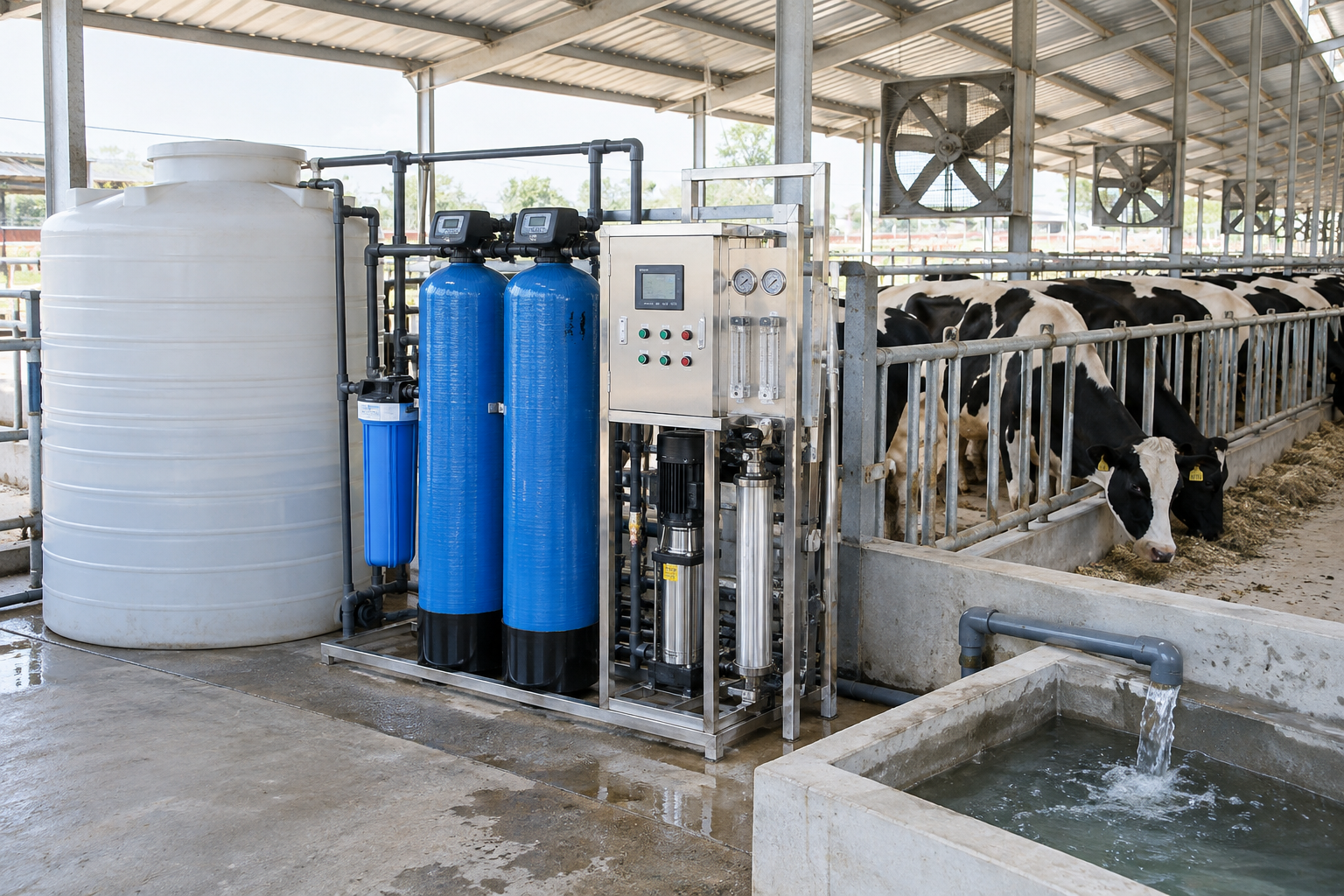
People often use “reverse osmosis water filter” to describe the whole system. During maintenance, that wording can cause confusion because different components perform different tasks.
- Sediment cartridges capture particles before they reach downstream equipment.
- Activated carbon may be used for dechlorination or other specified treatment duties.
- RO membranes separate product water from a more concentrated stream and reduce dissolved salts.
Some systems also include backwashable media filters, softeners, or other pretreatment stages. Their servicing requirements differ from those of disposable cartridges. Ask for a maintenance list that names each component and explains how its condition will be checked.
When Should Sediment Cartridges Be Replaced?
As a cartridge collects particles, resistance to flow can increase. Measuring pressure before and after the housing helps track that change. Compare readings at similar flow conditions and replace cartridges before the permitted pressure-drop limit is reached.
Also follow the specified maximum service interval. Low pressure drop is not permission to leave a cartridge installed indefinitely. For example, DuPont’s RO cartridge-filtration guidance calls for replacement before the permitted pressure-drop limit, and at least every three months. Confirm the applicable requirements for your installed system and cartridges.
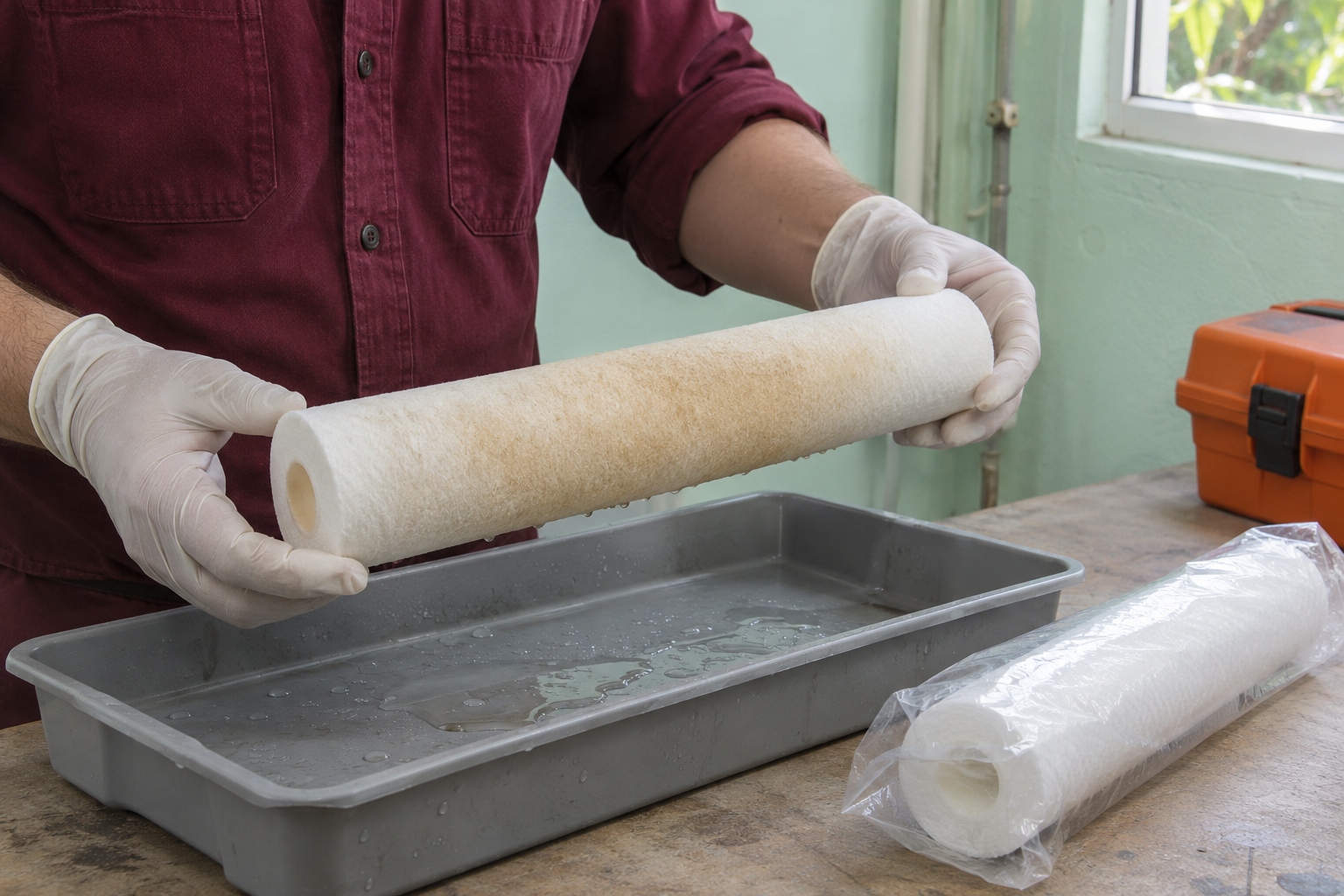
Inspecting a removed cartridge can provide useful clues, but color alone does not prove how well it was working. Photograph unusual deposits and record how long the cartridge had been in service.
If a cartridge that previously lasted several weeks starts blocking within days, investigate the change. Raw-water conditions, an upstream filter problem, or a change in operating flow may need attention. Repeated cartridge replacement can otherwise hide an unresolved pretreatment issue.
How Do You Know When Activated Carbon Needs Attention?
First identify what the carbon stage is expected to remove. If its purpose is to protect chlorine-sensitive RO membranes, the maintenance plan should include checking the relevant chlorine residual after that stage, using a suitable test method.
Clear-looking water and normal flow do not confirm that dechlorination is still effective. Likewise, taste and smell are not adequate substitutes for the required measurement.
For a granular activated-carbon vessel, backwashing and media replacement serve different purposes. Backwashing does not by itself confirm that treatment capacity has been restored. Follow the specified operating checks and replacement criteria for the media and treatment duty.
If a protective treatment target is no longer being met, follow the system’s shutdown or corrective-action instructions instead of continuing production until the next scheduled service date.
Does Lower Output Mean the RO Membranes Need Replacing?
Not necessarily. Lower water temperature, a change in feedwater salinity, reduced pressure, or a pretreatment problem can affect output. A falling flow reading alone does not establish that the membranes have reached the end of their service life.
Compare current performance with the baseline recorded when the system was operating correctly. A technical assessment should consider product flow, salt passage, pressure drop, temperature, and operating conditions. Normalization adjusts performance data for changes in conditions so that comparisons are more meaningful.
Where fouling or scaling is identified, an appropriate cleaning procedure may recover performance. Cleaning chemicals and conditions must match the membrane and the suspected deposit; improvised chemical mixtures can cause further damage.
Replacement becomes a consideration when damage is confirmed or acceptable performance cannot be restored after the underlying causes have been assessed and appropriate corrective work completed. There is no universal membrane lifespan that can be promised for every commercial RO system.
Order Spare Parts Before You Need Them
A replacement part needs more identification than “a filter for a 1000 L/hour machine.” Systems with the same output can use different cartridge sizes, seals, membranes, and housings.
Keep a confirmed parts list with:
- Cartridge dimensions, end connection, material, and filtration rating.
- Housing model and the correct replacement seals.
- Membrane manufacturer, full model number, and quantity.
- Pretreatment media or consumable specifications where applicable.
- Supplier lead times and storage requirements.
Do not substitute an RO membrane based only on physical size. A different model may change the system’s flow, pressure requirement, or product-water quality. Have compatibility checked before ordering.
Arrange maintenance using the approved procedure, including isolation and depressurization before opening filter housings. After servicing, complete the required flushing, leak checks, and water-quality checks before returning the system to normal use.
Build a Maintenance Plan Around Three Questions
What measurement tells us this component needs attention? Define the relevant pressure, water-quality, or performance check and its action limit.
What service interval must we follow even if the readings look normal? Record the applicable manufacturer and system requirements rather than relying on an informal habit.
Can we obtain the correct replacement before production is interrupted? Match your spare-parts stock to delivery times and how long the business can operate without treated water.
Contact AquaOxy with your system details, component labels, operating readings, and maintenance history. We can review the information needed to identify suitable consumables and discuss the next maintenance step.