
The best treatment system for borehole water in Africa is one selected for the actual water analysis and intended use. Some sources may need filtration and disinfection. Others require iron and manganese removal, hardness control, reverse osmosis, or a combination of treatment stages.
The country name alone cannot determine the configuration. Two boreholes serving nearby businesses can have different treatment requirements, and one source may change over time.
Before buying equipment, establish what is in the water, what quality you need at the point of use, and who will operate the system.
Start with What the Water Will Be Used For
A drinking-water refill business, hotel, laundry, and food-processing workshop may use the same borehole but need different treatment arrangements.
Identify each important use and its requirements. Drinking water needs to meet the applicable chemical and microbiological requirements. Production equipment may have additional limits specified by its manufacturer.
For a hotel, separate drinking and kitchen demand from laundry, irrigation, and other uses before deciding whether every incoming liter needs the same treatment. For a water-selling business, include storage and filling in the quality plan.
This step prevents a common purchasing mistake: choosing a machine by its hourly capacity before defining what the finished water must achieve.
Get a Representative Water Analysis
A handheld TDS meter is useful for an initial indication of dissolved-salt content, but it cannot identify individual contaminants, measure hardness reliably, or establish microbiological safety.
Arrange testing through a competent laboratory. Explain that the water will be used to select treatment equipment and state its intended use. The laboratory and treatment designer should agree the relevant parameters, sampling points, and handling instructions.
The assessment will commonly consider:
- pH, conductivity or TDS, and turbidity.
- Hardness, alkalinity, and the major dissolved ions needed for treatment design.
- Iron and manganese.
- Microbiological indicators appropriate to the intended use.
- Additional chemical hazards identified from local conditions and applicable requirements.
Tell the supplier whether the sample came directly from the borehole, after an existing filter, or from a storage tank. Also report known seasonal changes or differences after prolonged pumping.
For a more detailed starting point, see what water tests to arrange before buying an RO system.
Match Each Water Problem to a Treatment Duty
Particles and turbidity: suitable clarification or filtration may be needed. The arrangement depends on the loading and how consistently the source can supply acceptable feedwater.
Iron and manganese: these need a treatment strategy matched to their form, concentration, and water chemistry. Where oxidation and filtration are used, their sequence and operating conditions must be checked. Sending precipitated material into RO can create fouling problems.
Hardness and scaling potential: softening or another appropriate scale-control approach may be needed. Selection should consider the full chemistry and proposed recovery, rather than hardness alone.
Excess dissolved salts: appropriately designed RO may be suitable when salt reduction is required. Ordinary sediment and activated carbon filters do not perform the same desalination duty.
Microbial contamination: source protection, suitable treatment, disinfection, and hygienic handling need to be considered together. Removing visible dirt does not establish drinking-water safety.
These are treatment functions, not a universal sequence. A proposal should explain which functions your tested water needs and how the selected stages work together.
When Is Reverse Osmosis Appropriate?
RO is worth assessing when dissolved constituents need to be reduced to meet the required finished-water quality. It is not automatically necessary for every borehole.
A TDS reading of 2,000 ppm, for example, is useful screening information but does not complete the selection. The designer still needs to know which ions are present, the scaling risks, the required product quality, and the practical operating conditions.
High TDS and high hardness can occur together. RO may be part of the solution, but the pretreatment, membrane selection, pressure, and recovery must be checked as one design.
Ask the supplier to state the feedwater conditions supporting its proposed output. A freshwater RO package should not be assumed suitable for highly saline groundwater or seawater simply because the advertised capacity matches your demand.
Check Whether the Site Can Support the System
Confirm daily demand and the hours when treatment can reliably operate. Then check whether the borehole can supply the required feedwater, including relevant concentrate, backwash, and flushing allowances.
Provide the actual electrical supply details and describe outages or voltage problems. Equipment selection and protective arrangements should reflect those conditions.
Also identify who will perform routine checks, obtain consumables, and arrange maintenance. A treatment process that depends on tasks the operator cannot sustain needs reconsideration before purchase.
Finally, plan concentrate and backwash discharge. These flows are part of the installation, even when their pipework is excluded from the equipment quotation.
Verify the Water Where It Will Be Used
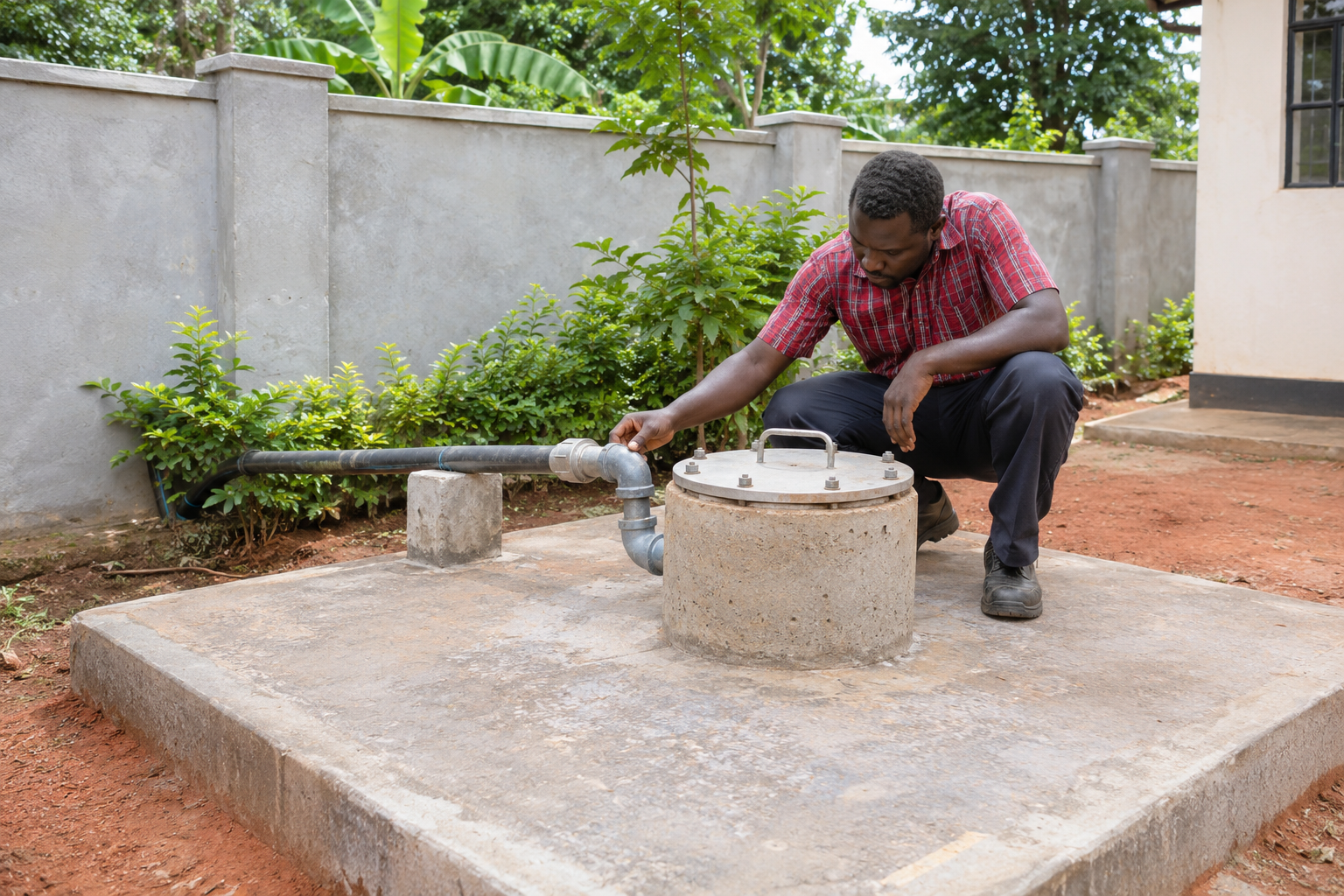
A complete drinking-water arrangement includes the source, treatment equipment, storage, and delivery. Inspect the borehole surroundings and wellhead as well as testing the water. Contamination risks at the source should be addressed rather than left entirely to downstream equipment.
After installation, verify the required water quality at agreed sampling points, including the relevant final point of use. Establish routine operating checks and a suitable testing program.
Before accepting a proposal, resolve three questions: Does it address the problems demonstrated by your water analysis? Can your site and operator support its daily requirements? How will you verify that suitable water reaches the user?
Contact AquaOxy with your borehole water report, intended use, required daily volume, electrical details, and site photos. We can review the selection information and discuss an appropriate treatment arrangement, including RO where needed.


